
Building alignment in healthcare analytics.
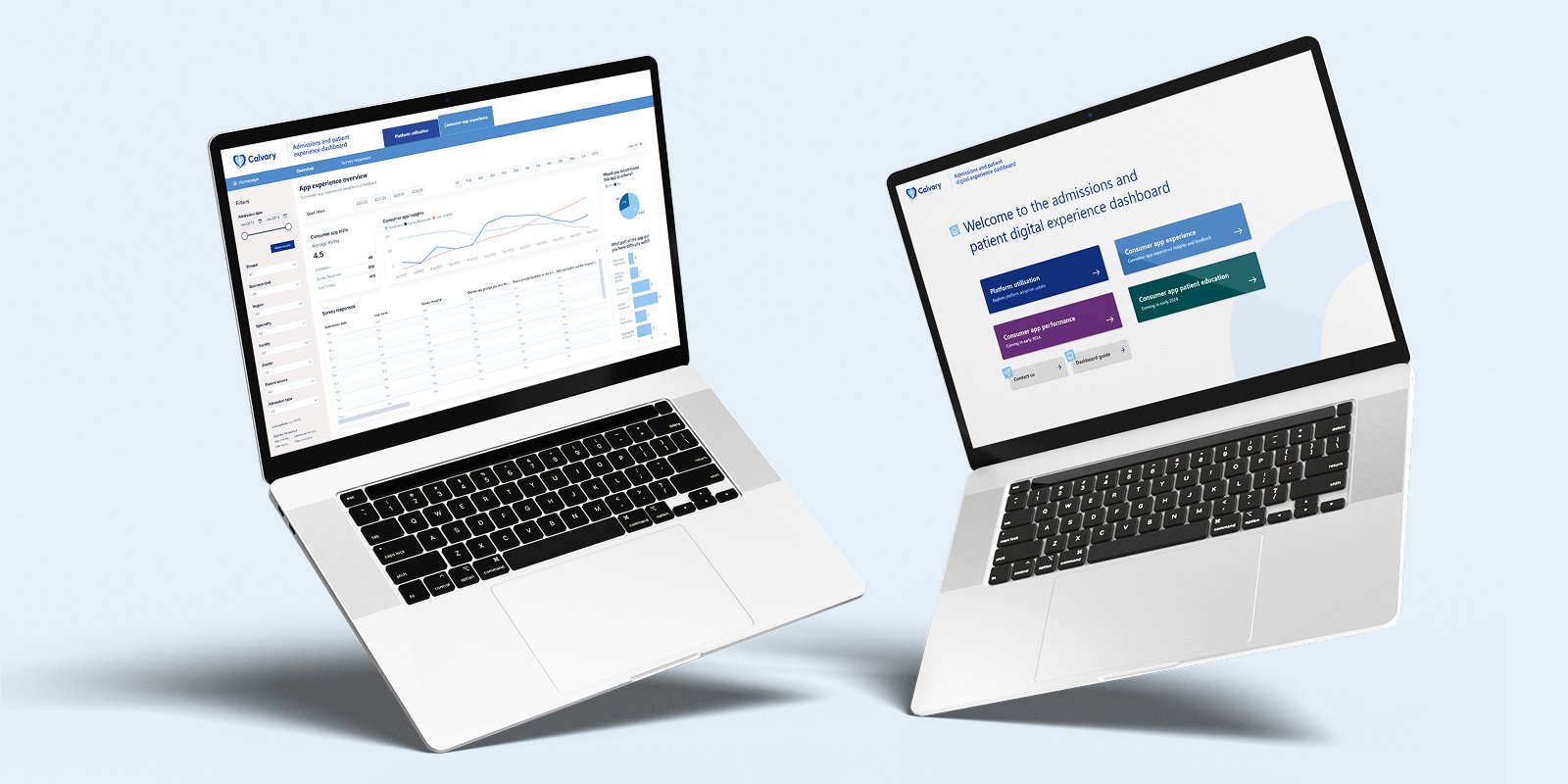
I joined a multidisciplinary team for this focused dashboard innovation sprint. The objective was to reduce manual data handling and help teams design an single source of truth about patient admissions and digital experience. To get this right, We would need to co-create a solution with those every day data users. So we did it.
Challenge
Unifying fragmented data touchpoints.
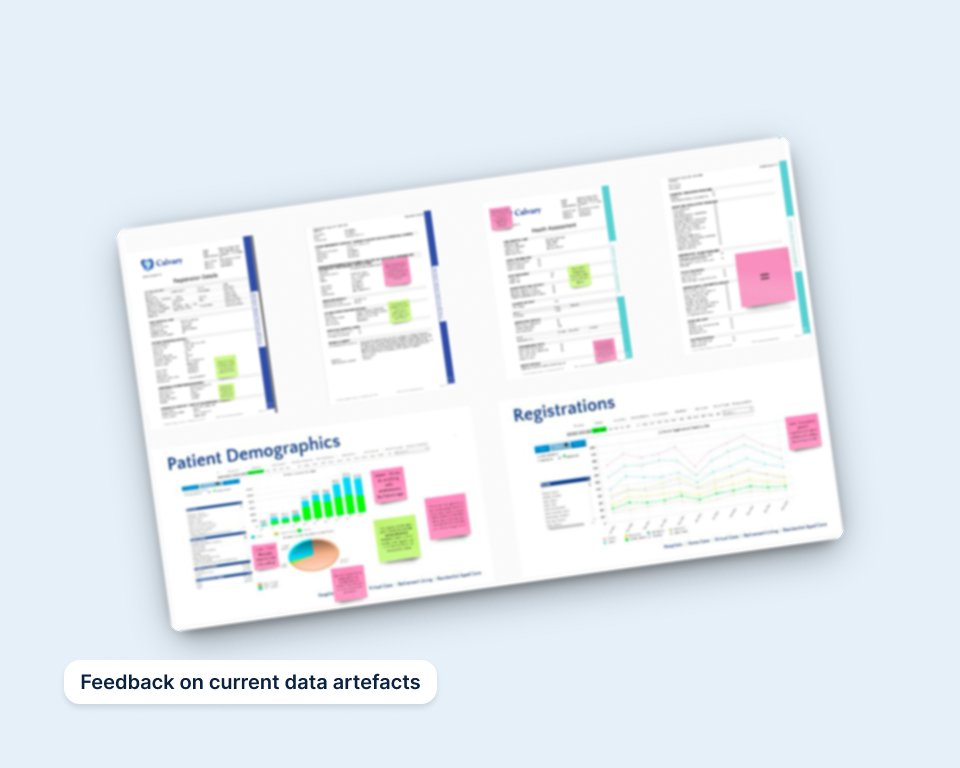
Calvary already had valuable information in place, internal dashboards, admission reports and consumer-facing apps. But each tool served a slightly different purpose, and the experience across them had not yet been connected into a unified, user-centred view.
The opportunity was there: to bring all these artefacts together into a single experience that aligned with stakeholders’ needs and gave them better clarity on digital patient onboarding analytics.
Process
Co-designing a solution with frontline teams.
We then brought everyone into the same room: clinicians, administrators and data managers.
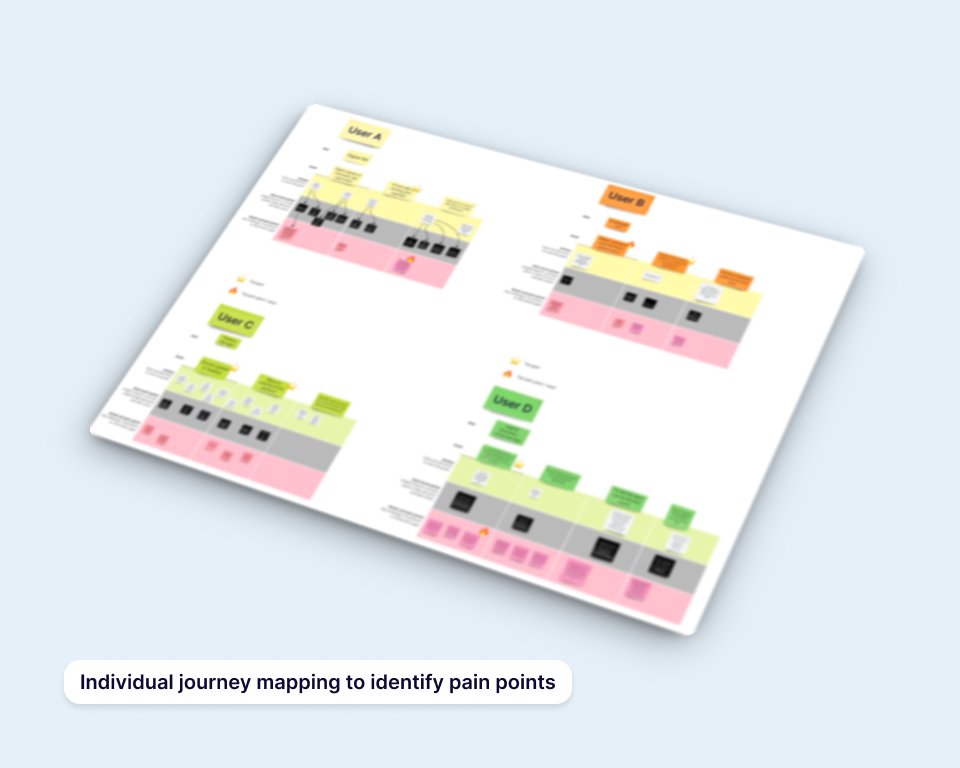
Over a few design thinking workshops, we analysed current conditions, mapped users objectives and pain points, prioritised opportunities, and co-created ideal dashboard concepts.
Instead of jumping straight into datasets or technology constraints, we worked with the users instead, and grounded every decision in what they needed to see, do and understand.
Solution
Moving from pain points to validated concepts.
We kicked off with a discovery workshop, introducing the project vision and walking through current data artefacts like existing dashboards and app screens. From there, we mapped out individual user journeys and defined their main pain points.
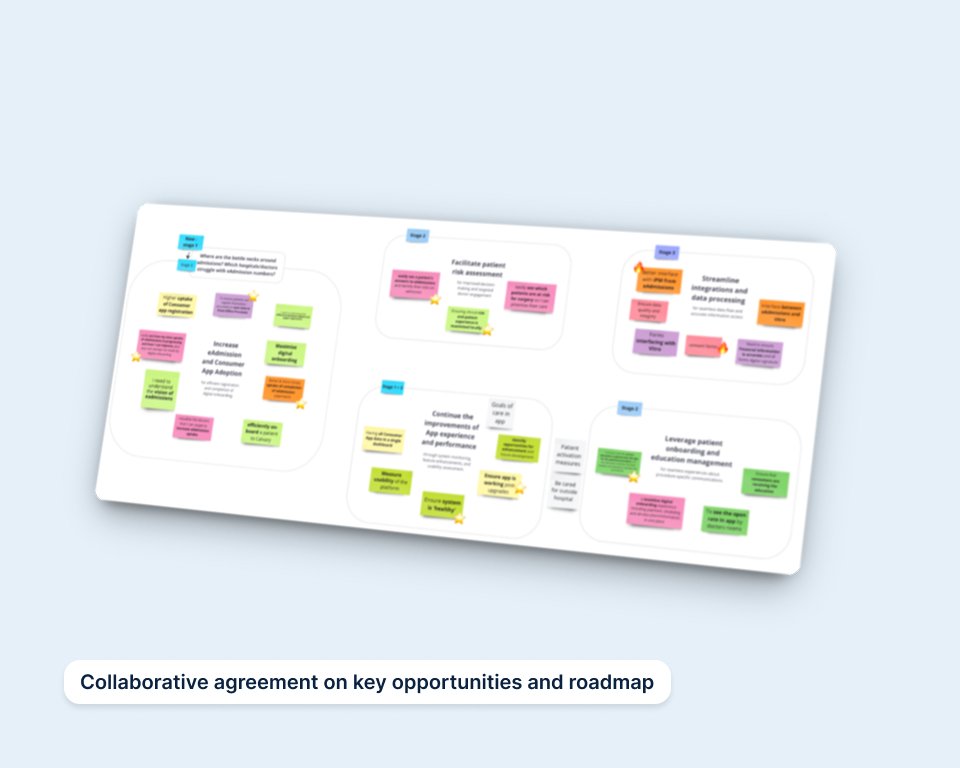
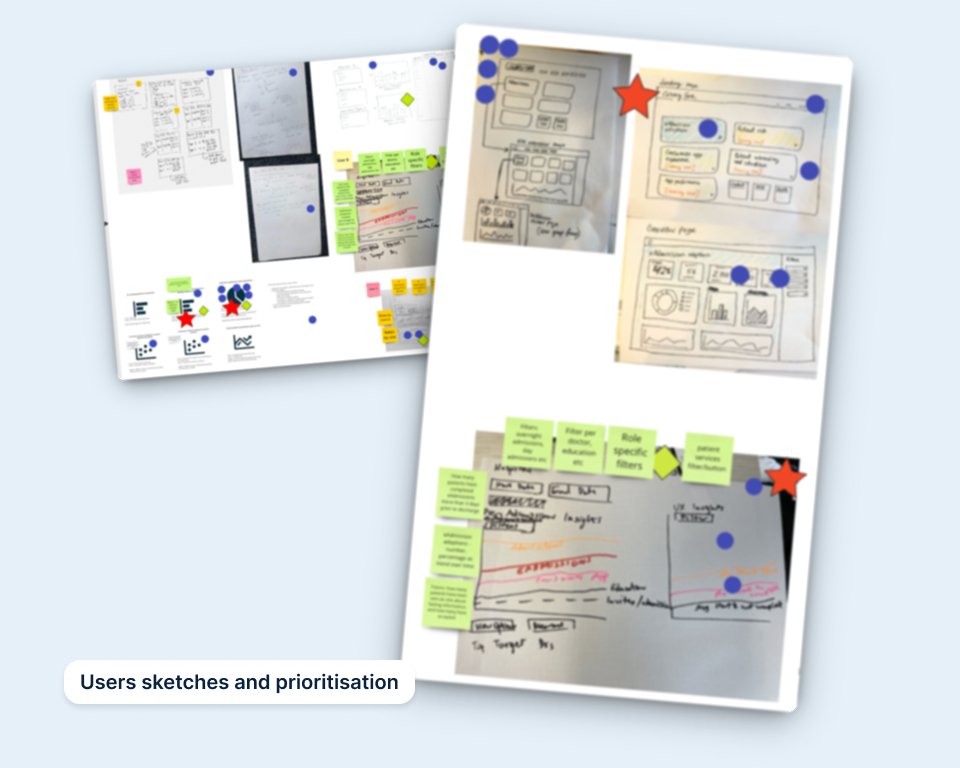
In the ideation session, we translated those pain points into opportunities. Participants sketched out their ideal dashboards, shared their ideas, voted on features, and prioritised them into stages based on feasibility and impact.
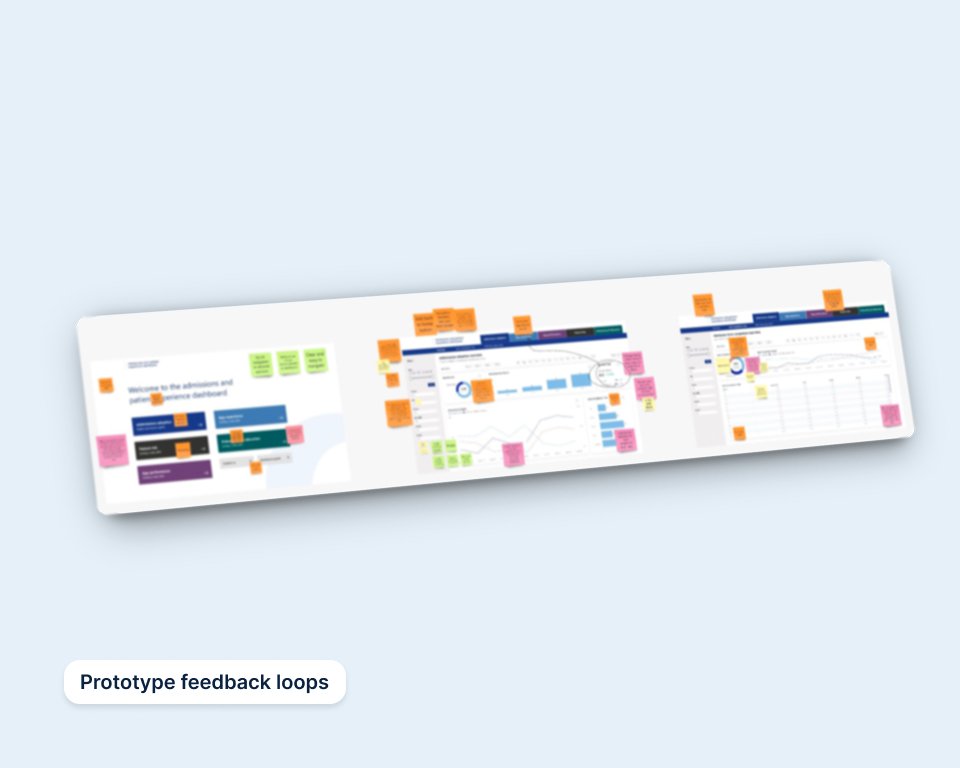
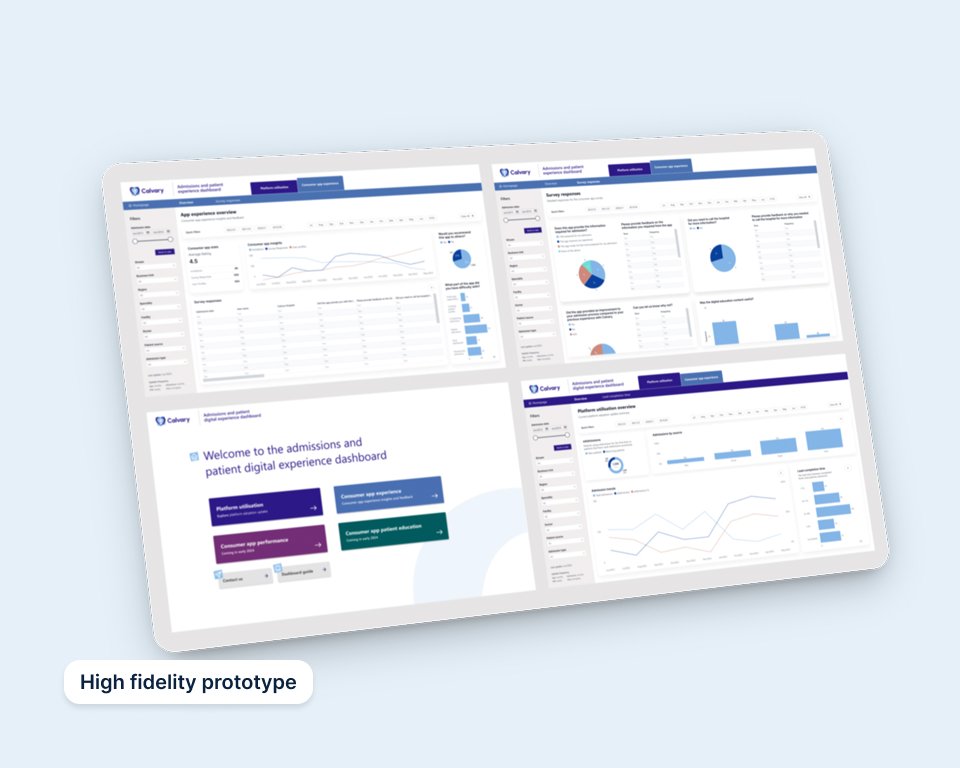
We then translated these concepts into a Figma prototype, high-fidelity, clickable, and tailored to available data. In follow-up sessions, we validated this prototype with the same team, capturing feedback in real time using Miro, and improving the proposed solution as required.
Results
A unified dashboard concept, built by its users.
This project wasn’t just about creating a dashboard, it was mostly about building alignment.
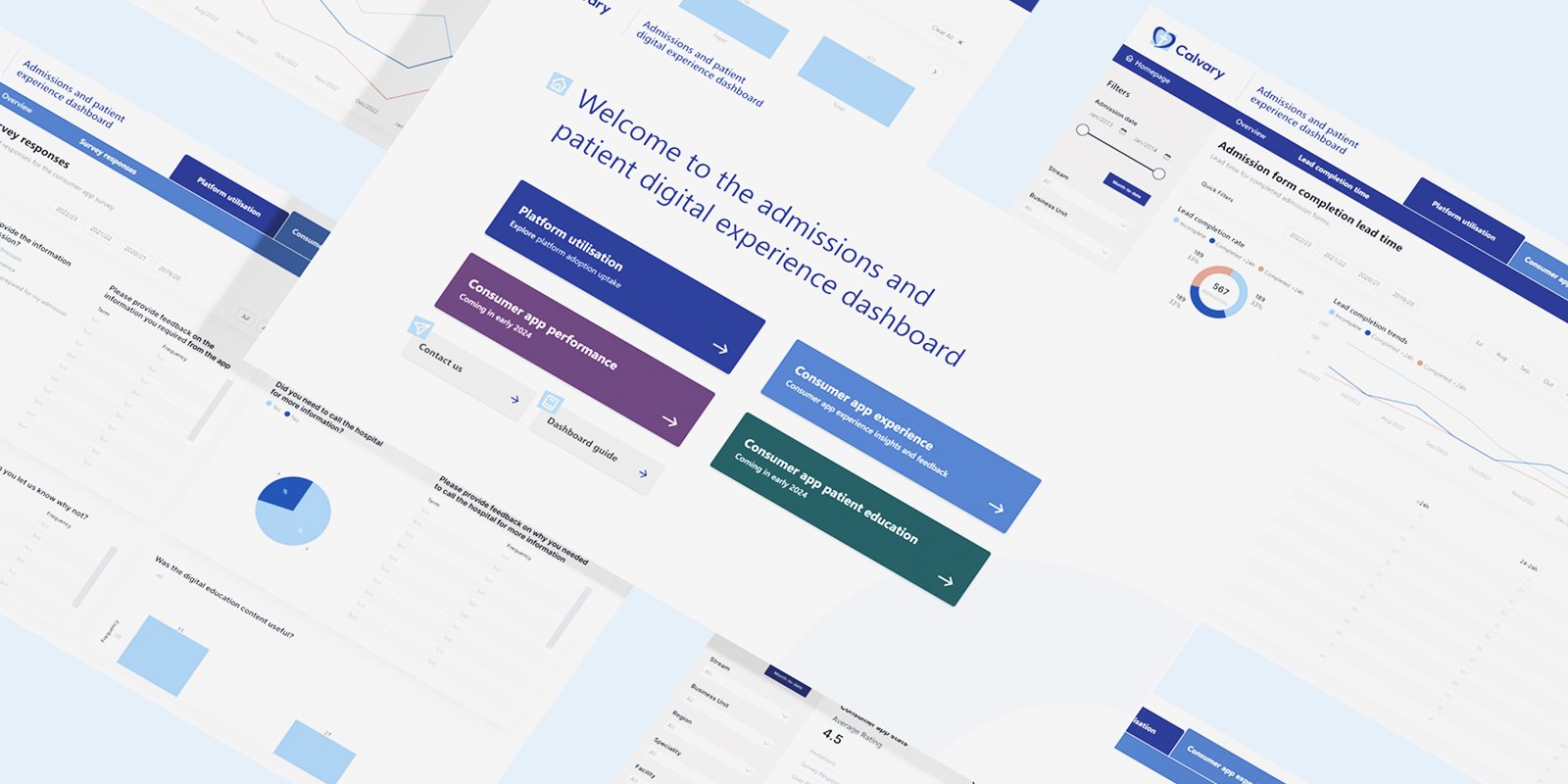
By the end of the sprint, we had a high-fidelity prototype that brought together the most relevant information of patients journey, from admission and app adoption to lead times and feedback.
Just as important, we had multiples departments aligned on what mattered most, with a shared sense of ownership and excitement about next stages.
Takeaways
Embedding design thinking into data visualisation.
Great dashboards don’t start with datasets or BI softwares, they start with people informational needs. Too often, organisations jump straight into development, only to end up with a solution that doesn’t reflect teams work or decision making needs.
The design thinking framework helps to bridge that gap: it’s a practical approach for understanding the real problem to be solved and considering users needs to design meaningful solutions, making sure data initiatives are actually useful, usable, and desirable.
In just a few weeks, we aligned on common needs, prioritised the path forward, and laid the groundwork for a collaborative user-led reporting solution, starting from clarity about the problem and ending with a solution that matters.